
The Cell Membrane and Fluid Mosaic Model

Updated: May 2
HSC Biology | Free Study Notes
This topic matters because the cell membrane controls what enters and leaves the cell, helping to maintain the cell’s internal environment.
In this lesson
what the cell membrane does
the structure of the phospholipid bilayer
the role of membrane proteins
what selective permeability means
why the membrane is described as a fluid mosaic
What is the cell membrane?
The cell membrane is a thin boundary around the cell.
Its main job is to separate the internal environment of the cell from the external environment. It also controls the movement of substances into and out of the cell.
This is essential because cells need to:
take in useful materials such as nutrients and gases
remove waste products
maintain stable internal conditions
The phospholipid bilayer
The basic structure of the cell membrane is the phospholipid bilayer.
What phospholipids are
A phospholipid is a molecule with:
a hydrophilic head, which is attracted to water
hydrophobic tails, which repel water
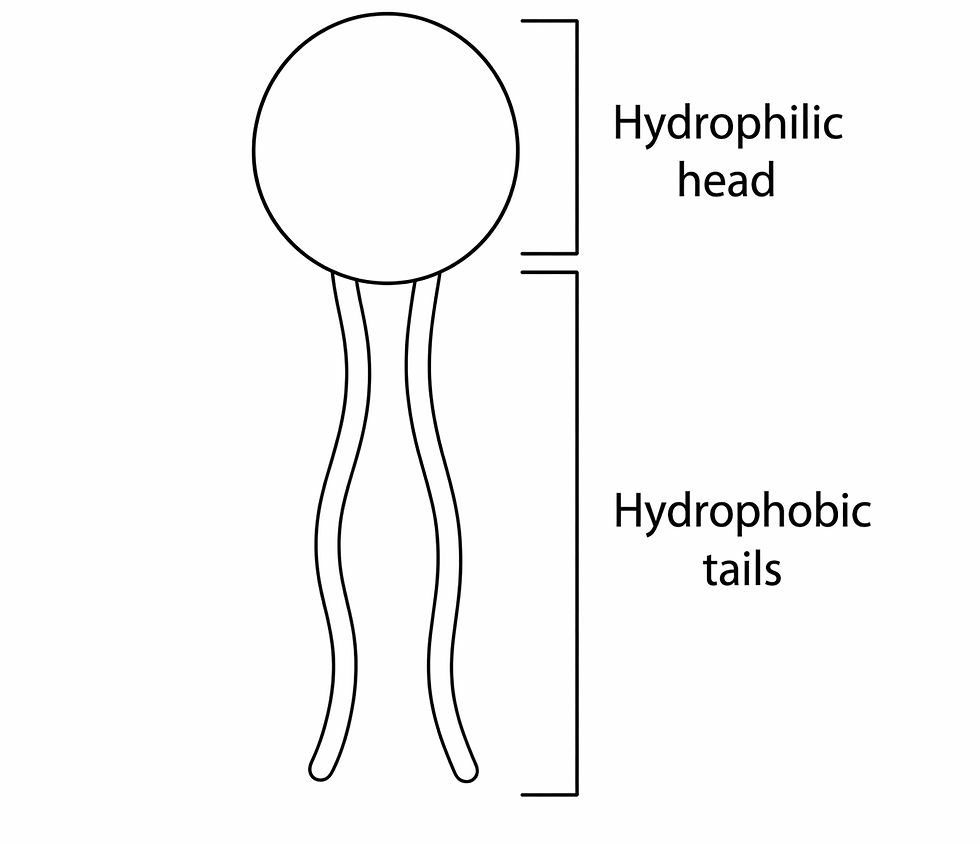
How the bilayer is arranged
Because cells exist in watery environments, phospholipids arrange themselves into two layers:
the hydrophilic heads face the water inside and outside the cell
the hydrophobic tails face inwards, away from the water
This forms the phospholipid bilayer.
Why this matters
This arrangement creates a flexible barrier. It helps prevent some substances from passing freely, while still allowing the cell to control exchange.
Membrane proteins
Proteins are embedded within the phospholipid bilayer.
Functions of membrane proteins
Membrane proteins can:
help transport substances across the membrane
act as channels or carriers
act as receptors for chemical signals
help with cell recognition
At this level, the most important idea is that membrane proteins help the membrane carry out specialised jobs, especially transport.
Why proteins are important
The phospholipid bilayer alone cannot efficiently move all materials across the membrane. Membrane proteins make the membrane more functional and help explain why the cell membrane is not just a simple barrier.
Selective permeability
The cell membrane is selectively permeable.
What selective permeability means
Selective permeability means the membrane allows some substances to pass through more easily than others.
For example:
some small molecules can cross more easily
other substances need the help of membrane proteins
some substances cannot cross at all unless energy is used
Why selective permeability matters
Selective permeability allows the cell to:
take in what it needs
prevent harmful or unnecessary substances entering
remove wastes
keep internal conditions stable
This idea links directly to later topics such as diffusion, osmosis and active transport. The syllabus also connects membrane exchange with concentration gradients, surface area to volume ratio, and the characteristics of the materials being exchanged.
The fluid mosaic model
The accepted model of the cell membrane is the fluid mosaic model.
Why it is called “fluid”
The membrane is described as fluid because phospholipids and some proteins can move sideways within the layer. The membrane is not rigid or fixed.
Why it is called “mosaic”
The membrane is described as a mosaic because it is made of different parts fitted together, especially:
phospholipids
proteins
other molecules such as cholesterol and carbohydrates, depending on the cell
So, the membrane is a moving layer of mixed components rather than a single solid sheet.
Putting the model together
Main features of the fluid mosaic model
made mostly of a phospholipid bilayer
contains embedded proteins
flexible, not rigid
selectively permeable
controls exchange between the cell and its surroundings

What students should understand
You do not just need to name the parts. You need to link structure to function.
For example:
the phospholipid bilayer forms the main barrier
membrane proteins help with transport and communication
the fluid nature allows flexibility
the membrane’s structure makes it selectively permeable
Worked example
Exam-style question
Explain how the structure of the cell membrane helps it to be selectively permeable.
Worked answer
The cell membrane is made of a phospholipid bilayer with embedded proteins. The phospholipid bilayer forms a barrier that prevents some substances from passing easily, while membrane proteins allow certain substances to move across the membrane. This means the membrane can control what enters and leaves the cell, so it is selectively permeable.
Why this works
This answer:
names the key structures
links structure to function
directly explains selective permeability
Common mistakes
Saying the membrane is made only of phospholipids. It also contains proteins.
Confusing selectively permeable with completely permeable.
Saying the membrane is rigid. The fluid mosaic model shows that it is flexible.
Forgetting that the bilayer has two layers of phospholipids.
Describing the membrane as just a wall, without explaining its role in controlling exchange.
Quick quiz
What is the main function of the cell membrane?
What is a phospholipid bilayer?
What do membrane proteins do?
What does selectively permeable mean?
Why is the membrane called a fluid mosaic?
Comments